Condition monitoring methods
The monitoring method depends on equipment criticality, failure development rate and available access. Route-based collection may be sufficient for lower-criticality assets; continuous online monitoring is appropriate where changes must be detected quickly.
- Periodic portable measurements
- Continuous online monitoring
- Protection and trip measurements
- Process and operating-data correlation
- Visual and maintenance inspection
Measurement points and directions
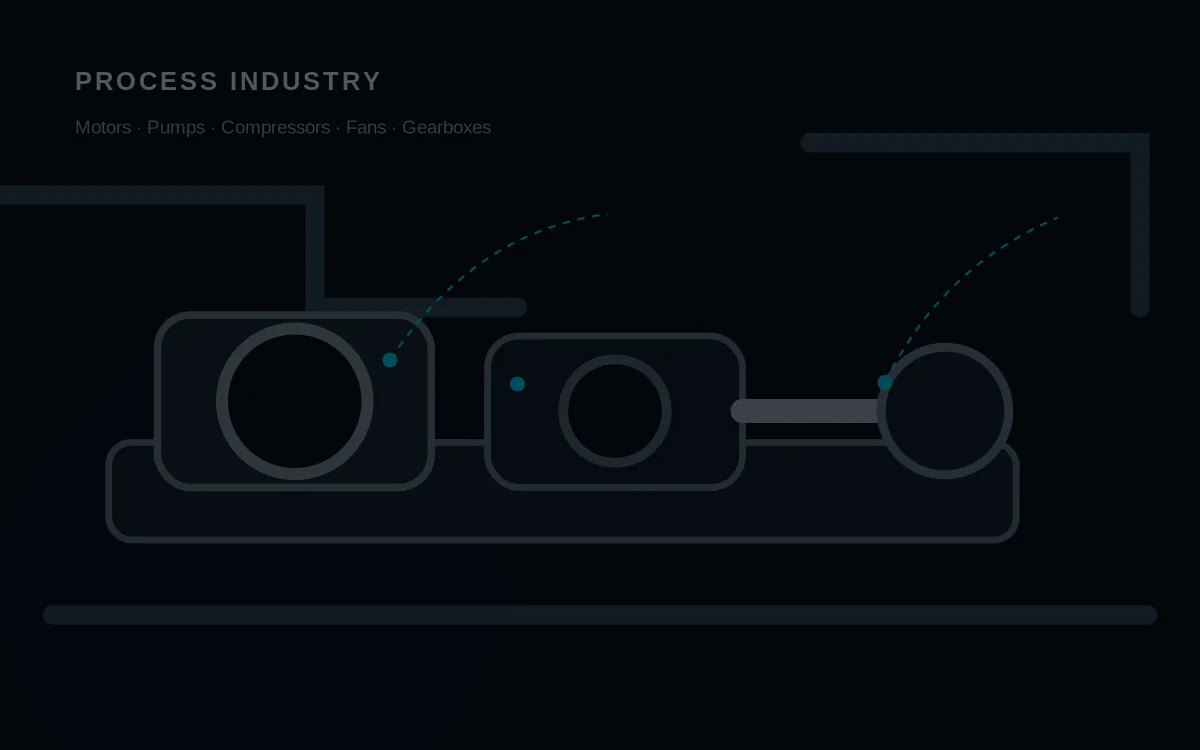
Sensor location determines what the measurement can reveal. Bearing housings, horizontal, vertical and axial directions are selected from the machine design and likely fault modes.
- Drive-end and non-drive-end bearings
- Horizontal and vertical radial directions
- Axial measurement
- Gearbox input and output locations
- Foundation or structural points
Alarm strategy
Thresholds should reflect machine class, baseline behaviour, operating condition and the purpose of the measurement. Alarm persistence and event logic help prevent repeated notifications from short transient changes.
- Baseline and standard-based limits
- Warning and danger levels
- Time delay and persistence
- Operating-state enable conditions
- Event acknowledgement
Condition-monitoring deliverables
The system should provide understandable status for operations and detailed evidence for engineers.
- Machine status overview
- Overall-value trend
- Diagnostic waveform and spectrum
- Event history
- Maintenance report
- Post-maintenance verification